
URBANREC Project Promotes Reuse in Valencia, Creates First Recycling Centre in Turkey, and Opens “Second-Chance” Shops in Belgium

The European Union countries produce 19 million tonnes of bulky waste each year, of which 60% is landfilled. To solve this problem, a total of 21 entities started up the URBANREC project three years ago. The project is led by AIMPLAS, the Plastics Technology Centre, within the framework of the EU funding programme H2020.
On 6 November, the date of project completion, a conference will be held in the seat of the European Parliament in Brussels, where the 21 participant partners will discuss the results and explain the pilot programmes developed in Flanders, Valencia, Izmir and Warsaw. Recommendations will also be presented to improve European legislation on bulky waste, attention will be drawn to good reuse practices and selective collection strategies, and presentations will be given on business achievements to recover materials such as plastics, foams, textiles and wood.

These are the results of the work done over a three-year period to achieve a comprehensive solution for recovering bulky waste. Solutions have been developed for all stages in the cycle, including prevention, logistics and waste treatment using innovative processes.

The first recycling centre in Turkey
In particular, innovative collection and reuse systems were implemented and involved different actions depending on the level of progress in each country. In Turkey, which had no recycling centres, the milestone was achieved of setting up the first recycling centre within the framework of this project. In Belgium, where the level of development for this kind of structure was higher, a chain of “second-chance” shops was opened. Finally, in Valencia, reuse skips were installed.
Innovative recycling processes
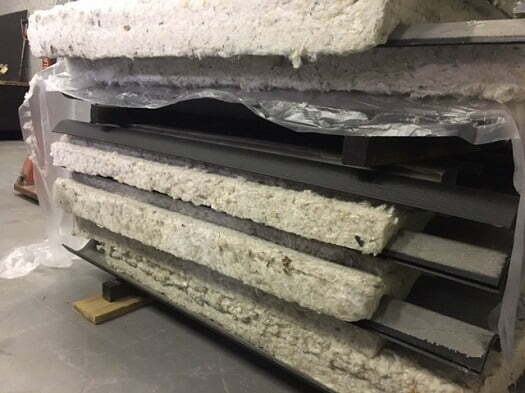
Regarding waste treatment, new collection and disassembling processes for bulky waste were developed to obtain high value-added recycled products such as adhesives and foams for mattresses, solvents and additives, foams and textiles for thermal insulation, felt- and fibre-reinforced composites, and reinforced plastics such as wood-plastic composites (WPC) through innovative chemical and mechanical solutions such as 3D cut fragmentation and the catalytic hydro-gasification plasma process.

Two guides (on ecodesign and implementation) have also been published and will be presented by ACR+ to local and regional authorities in Brussels on 7 November. During this workshop, attendees will receive information about good practices and how to improve their strategies. Three parallel sessions will take place to discuss these and other topics: how to develop and implement a step-by-step reuse strategy, plastics used in sectors other than packaging and textiles for uses unrelated to garments. The aim is for participants to exchange experiences and good practices, as well as roadmaps for implementing them. These guides will be available through an e-learning platform on the project website.
A project in line with the Circular Economy
URBANREC is a project in line with the European Union’s promotion of the Circular Economy and Sustainable Development Goal (SDG) 12: “Ensure sustainable consumption and production patterns”, given that waste becomes a resource, products that no longer meet consumers’ initial needs are reintroduced into the market, and reuse and recycling are improved.
The consortium of the URBANREC project is coordinated by AIMPLAS and Spanish regional bodies, including the Provincial Government of Valencia and the Valencian Inland Consortium, and Valencian companies ECOFRAG, COLCHONES DELAX and BLUEPLASMA POWER. The other technology centres involved are Fraunhofer-ICT (Germany), CENTEXBEL (Belgium), IOS-PIB (Poland) and IYTE (Turkey). The Association of Cities and Regions for Sustainable Resource Management (ACR+), located in Belgium, also participated. The European companies that form part of the consortium are IZNAB (Poland), RAMPF (Germany), RESCOLL (France), EUROSPUMA (Portugal), PROCOTEX (Belgium) and VANHEEDE (Belgium), as well as the Public Waste Agency of Flanders and IMOG (Belgium), the Waste Management Department of Warsaw City Council (Poland) and Bornova City Council (Turkey).
This project received funding from the European Union’s Horizon 2020 research and innovation programme under grant agreement no 690103.