
Smart Hydrogen Storage: How Porous Materials Are Revolutionizing Energy
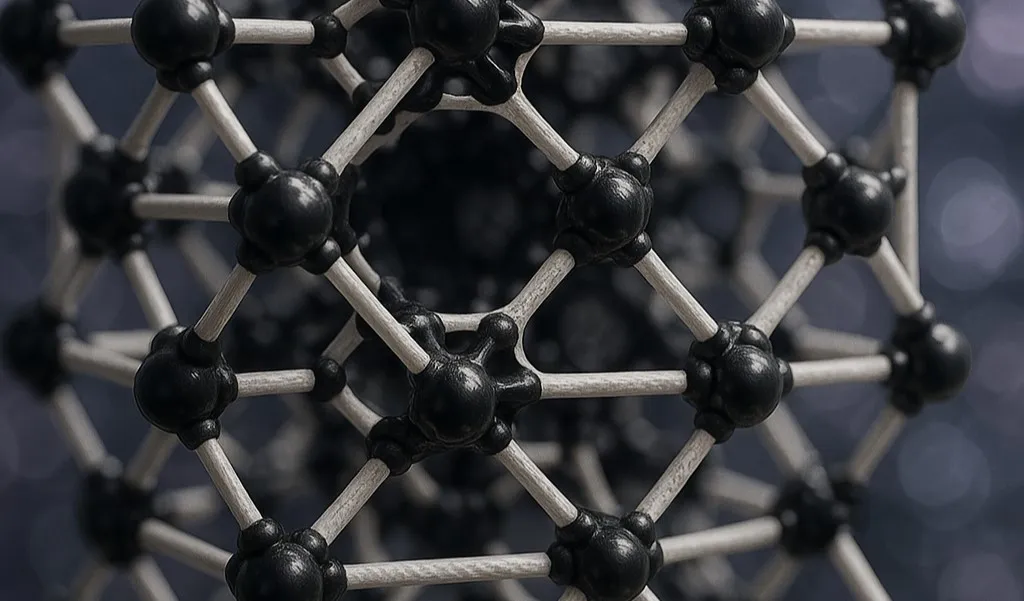
Hydrogen is emerging as one of the most promising energy vectors in the transition toward a low-carbon economy. Its high energy density per unit of mass and the possibility of being produced from renewable sources make it a key alternative for sustainable mobility, seasonal energy storage, and a wide range of industrial applications. However, one of the main challenges for large-scale implementation remains its safe and efficient storage.
Why porous materials?
Among hydrogen storage strategies, porous materials have attracted increasing attention due to their ability to adsorb large amounts of gas at low temperatures and moderate pressures. Notable examples include:
- MOFs (Metal–Organic Frameworks): Crystalline materials with extremely high internal surface areas.
- COFs (Covalent Organic Frameworks): Organic structures with tunable pores.
- Porous polymers (PPNs, CMPs, HCPs): Fully organic, lightweight, and highly processable materials that offer advantages in scalability and chemical stability. They also allow fine-tuning of surface chemistry to enhance hydrogen affinity.
- Activated carbons and graphite derivatives: Cost-effective and scalable.
- Zeolites and hybrid materials: With potential for specific applications.
These materials act as molecular “sponges,” capturing hydrogen within their pores through physical interactions (adsorption) at cryogenic temperatures or, depending on their design, under milder conditions. The combination of advanced porous material synthesis with experimental validation positions us strategically to contribute to the development of real-world hydrogen storage solutions. Our goal is to identify and optimize materials that are not only efficient but also stable, cost-effective, and sustainable.
Application of porous materials inside hydrogen storage tanks
One of the most promising applications of porous materials is their direct integration into hydrogen storage tanks. Unlike purely physical storage methods—such as compressed hydrogen at 700 bar or cryogenic liquid hydrogen—using adsorbent materials enables greater hydrogen capacity in the same volume at lower pressures (e.g., between 100 and 200 bar), thanks to their ability to trap gas within their pores via physical interactions.
This approach holds great potential for fuel cell vehicles such as cars, buses, and trucks, where maximizing range without significantly increasing tank size or weight is critical. For example, integrating materials like MOFs (Metal–Organic Frameworks) into tank design can achieve volumetric hydrogen densities close to or even exceeding those reached with 700-bar compressed gas, while operating at lower pressures and with enhanced safety.
In addition, such systems could benefit hydrogen-powered unmanned aerial vehicles (drones), where every gram counts, and stationary storage stations, where efficient space use and reduced compression costs are priorities. The development and experimental validation of these materials—such as the testing we conduct using our new high-pressure hydrogen adsorption system—is essential to accelerate the transition to a safer, more efficient, and large-scale hydrogen infrastructure.
Experimental validation: our new high-pressure hydrogen adsorption system
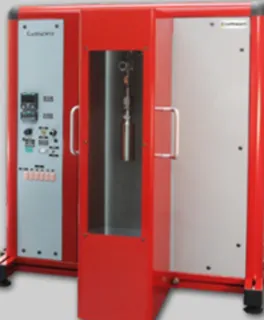
In our lab, we have taken a crucial step toward practical validation of these materials with the recent acquisition of a high-pressure hydrogen adsorption system. This instrument allows us to assess the real behavior of synthesized materials under controlled conditions that simulate industrial use scenarios.
Key features of the equipment include:
- Measurement of adsorption isotherms at pressures up to 200 bar
- Capability to operate at cryogenic temperatures and in controlled environments
- High accuracy in determining H₂ storage capacity
- Automated and repeatable analysis to compare multiple samples under identical conditions
Thanks to this system, we can generate rigorous experimental data on storage efficiency, adsorption/desorption kinetics, and cyclic stability—critical parameters for assessing technological viability. Moreover, the equipment also allows for the validation of adsorption of other gases such as CO₂, CH₄, N₂, Ar, He, and C₂ to C₆ hydrocarbons, among others.
Want to learn more about our hydrogen storage solutions?
At AIMPLAS, we support companies in the experimental validation of gas storage materials, offering advanced equipment and specialized technical guidance. If you’re working on innovative solutions and need support with their characterization, contact us and discover how we can collaborate.