
Can polymers be used to print and inject ceramics and metals?
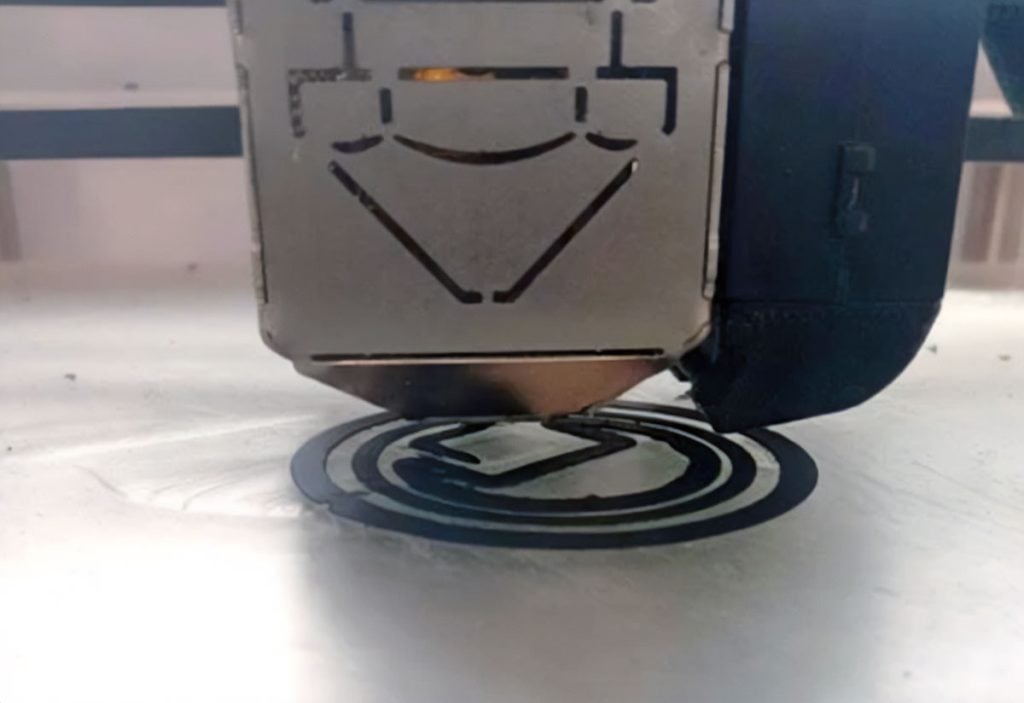
Processing metal/ceramic composite materials with a polymer binder can replace over 33 machining steps in the production of minuscule components by injecting many dental brackets simultaneously in a single step【1】. This is just one of the numerous applications achievable with polymer-based printers and injectors using powder and sintering technologies.
Advantages of Material and Processing
The need for certain properties, including hardness, thermal/electrical conductivity, high-temperature resistance and corrosion resistance, makes it necessary to use metal and ceramic components. Of the processing methods available, powder injection moulding (PIM) and fused filament fabrication (FFF) stand out for their versatility. These techniques make it possible to produce highly complex metal and ceramic parts with high performance and reduced costs, especially for large-scale production. However, this would not be possible without the critical role played by thermoplastic polymers in the process.
Advantages of These Production Processes
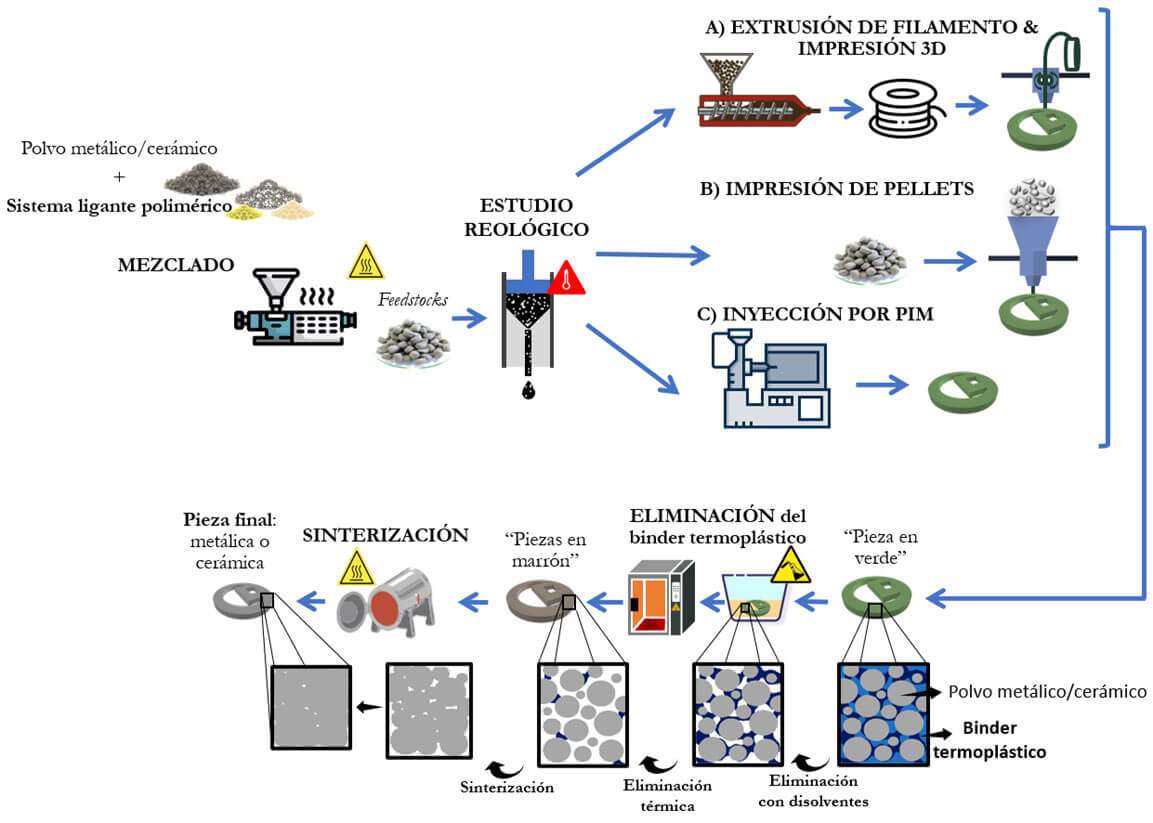
These methods involve the use of a temporary thermoplastic binder system to provide a carrier for injection moulding and printing of a material with a heavy load of metal and ceramic powders. After thermal processing in a furnace, the polymer is degraded and fuses with the solid particles through sintering to produce metal and ceramic components.
- The process begins by developing a feedstock, a composite material of powder and polymer binder. The feedstock is moulded like plastic, either through injection moulding or by extruding filaments for printing. The resulting parts, called green parts, then go through the debinding process to produce brown parts, which contain enough polymer for cohesion during sintering.
- In the sintering stage, the brown parts fuse together to reduce porosity and achieve the high density and characteristic properties of the target metal and ceramic materials.
The Essential Role of the Polymer Binder
Although the binder system represents a small amount of the feedstock (typically less than 15% by weight), it is crucial for ensuring a defect-free process. Its roles include:
- High powder content: Minimizes deformation during debinding and sintering while balancing the solid load with the polymer system’s flow characteristics.
- Sufficient rigidity: Prevents deformation during handling and thermal treatments.
- Flexibility and rigidity in filament production: Facilitates smooth feeding into 3D printers without buckling or tearing.
- Controlled degradation: The binder must degrade progressively without deforming the part, which calls for a carefully balanced composition of polymers and additives.
| Property | Composition for Printing | Composición para inyección |
| Flexibility | Flexible component 40-70 %vol. Mainly thermoplastic elastomers |
– |
| Flexibility | Fluidising component 0-10 %vol. Waxes, low molecular weight polymers |
Fluidising component 15-50 %vol. Waxes, low molecular weight polymers |
| Rigidity | Backbone component 0-50 %vol. Mainly polyolefins |
Backbone component 15-50 %vol. Mainly polyolefins |
| Compatibility | Additives 0-5 %vol. Compatibilisers, dispersants |
Additives 0-5 %vol. Compatibilisers, dispersants |
The binder system typically includes four components: flexible polymers, backbones, plasticizers and additives, each contributing specific properties such as flow, rigidity and compatibility with powders.
Applications
Numerous successful applications demonstrate the versatility of these methods. For instance:
- Aerospace: Injection moulding of small compressor blades for Rolls-Royce engines (e.g. the Pearl 15).
- Automotive: Optimization of oil spray coolers, which reduces machining steps for angled cavities.
- Consumer electronics: Since 2016, more than 500 million units of smartphones have been produced using this camera protector technology.
- Biomedical: A single injection step replaces over 33 traditional machining steps to produce dental brackets.

Our Contribution to Current Challenges
At AIMPLAS, we provide the facilities required for compounding, characterization, injection moulding and 3D printing to develop materials suitable for these applications. Given the binder system’s critical role, designing new metal and ceramic materials requires careful adaptation of composition to meet flow characteristics, moulding requirements and the debinding stage.
With our expertise, AIMPLAS not only supports the development of polymers compatible with different powder materials to ensure the feedstock meets all process requirements, but also overcomes the challenges of 3D printing and injection moulding of metals and ceramics.
References
[1] Huff, S. de OrthoOrganizers (Ed.), Conferencia PIM 2000 “PIM Producers”, State College, Penn State, 2000.
[2] N. Loh, S. Tor, K. Khor, Production of metal matrix composite part by powder injection molding, Journal of Materials Processing Technology 108 (2001) 398–407. https://doi.org/10.1016/S0924-0136(00)00855-4
[3] J.A. Naranjo, C. Berges, A. Gallego, G. Herranz, A novel printable high-speed steel filament: towards the solution for wear-resistant customized tools by AM alternative. In press, Journal of Materials Research and Technology 11 (2020) 1534–1547. https://doi.org/10.1016/j.jmrt.2021.02.001.
[4] J. Gonzalez-Gutierrez, S. Cano, S. Schuschnigg, C. Kukla, J. Sapkota, C. Holzer, Additive Manufacturing of Metallic and Ceramic Components by the Material Extrusion of Highly-Filled Polymers: A Review and Future Perspectives, Materials (Basel) 11 (2018). https://doi.org/10.3390/ma11050840.
[5] R.M. German, A. Bose, Injection molding of metals and ceramics, Metal Powder Industries Federation, Princeton N.J. U.S.A., 1997.
[6] PIM International Magazine.https://www.pim-international.com/powder-injection-moulding-international-magazine-archive/