
The Importance of Pilot Plant Testing in Polymer Synthesis

One of the recurring challenges in R&D is the so-called “Valley of Death,” which describes the critical and hazardous gap between the basic research phase and marketing a product or technology. It highlights the difficulties and risks involved in transforming laboratory innovations into market-ready products. Only when a new technology is well-established and supported by a viable business model does private industry typically invest heavily to push the technology towards commercialization.
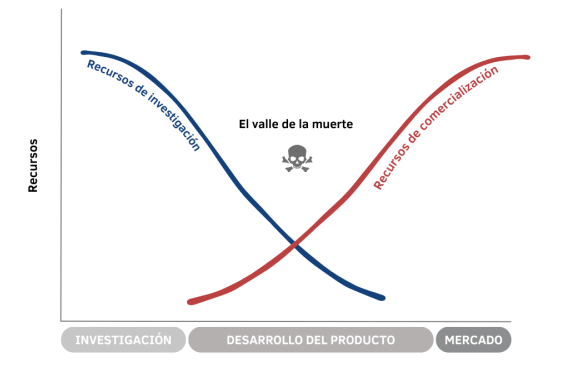
Figure 1: Figure illustrating the availability of resources across the development stages of an innovative material.
The plastics market continues to grow. Its global value in 2023 was $624 billion with a compound annual growth rate (CAGR) of 3.4%. This market includes:
- Sustainable plastics and bioplastics (e.g. biopolyesters, biodegradable and bio-based polymers), whose CAGR is 21.3. It has an anticipated market value of $20.9 billion by 2028.
- High-performance plastics (e.g. polyamides, polyimides and fluoropolymers) with a CAGR of 9.5% and a projected market size of $59 billion by 2032.
Significant R&D advances have been made in recent years in both bioplastics and high-performance plastics with the aim of creating more sustainable materials and improved properties across a wide range of application sectors within the plastics industry.
For the development of novel polymers (e.g. those with enhanced properties and those derived from unconventional sources), it is essential to carry out pilot plant development. This step transitions laboratory-scale achievements, often in grams or only a few kilograms, to multi-kilogram scale in a pilot plant to provide demos for industrial production at scales of tonnes per year.
Plastics Research and Chemical Recycling
The chemical recycling market is rapidly evolving as a critical segment within sustainable waste management and circular economy practices. Unlike mechanical recycling, which degrades polymer quality with each cycle, chemical recycling breaks down plastic waste into its constituent units (monomers) and other valuable chemicals to enable the production of high-quality materials comparable to virgin polymers.
The global market for chemical recycling of plastics was $14.82 billion in 2023 and its CAGR is expected to be 9.4% from 2024 to 2030. Targeted key materials include polyethylene terephthalate (PET), polyurethanes (PUR) and polyamides such as nylon.
Chemical recycling involves two main steps:
- Depolymerization: breaking down the polymer into its monomers.
- Repolymerization: reassembling monomers into polymers.
Among repolymerization technologies, solid-state polymerization (SSP) stands out. This thermal process, applied after initial repolymerization, increases the molecular weight of polymers through solid-state reactions without melting them. For materials like PET and polyamides, SSP is vital for enhancing intrinsic viscosity and mechanical properties to produce recycled polymers that are suitable for high-performance applications such as food-grade packaging and engineering plastics.
SSP plays a key role in producing high-quality recycled polymers that meet stringent regulatory and industrial standards. As demand for sustainable materials grows, SSP offers a viable solution for improving the properties of recycled polyesters like PET and polyamides by expanding their applicability and driving the growth of chemical recycling markets.
AIMPLAS: Bridging the Valley of Death
AIMPLAS’ pilot plant capabilities provide a bridge to cross the Valley of Death. The pilot plant for chemical processes enables scaling up laboratory experimental results to near-commercial production while assessing feasibility and paving the way for industrialization.

Our pilot plants feature two main types of reactors:
- Glass reactors: for reactions under moderate pressure and temperature requirements. These reactors, with capacities ranging from 4 to 200 L, can provide temperatures of up to 300°C using thermal oil jacketed cookers. They can also be used for processes involving inert atmospheres and inert gas flows.
- Steel reactors: for higher pressure and temperature conditions, AIMPLAS utilizes AISI-316L stainless steel autoclaves with capacities of from 10 to 100 L. These reactors feature mechanical agitators and electric heating to reach temperatures of up to 300°C and pressures of as much as 50 bars. They are ideal for producing high molecular weight and high-viscosity polymers such as polyesters and polyamides.
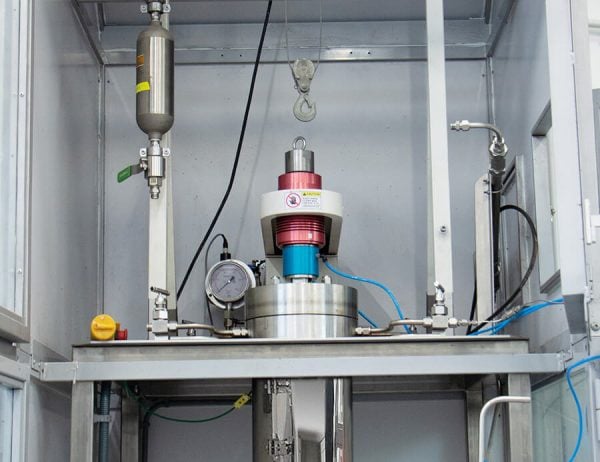
Figure 2: Steel reactors with capacities of 10, 20 and 100 L.
After polymerization, AIMPLAS can perform in-line processing of the polymers obtained from the reactors as filaments or pellets so that the material is ready for direct use in extrusion and other processing applications.
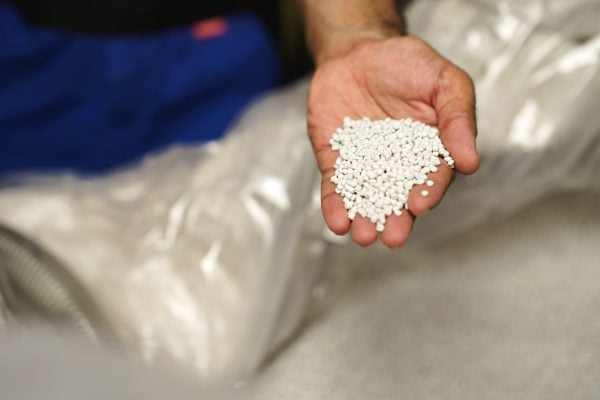
Regarding solid-state polymerization (SSP), AIMPLAS’ pilot plant includes rotary equipment capable of processing batches of polyester such as PET up to approximately 10 kg, thus efficiently improving properties for further applications.
At AIMPLAS, our mission is to add value to the plastics industry and society. By leveraging pilot plant scaling capabilities with the ultimate aim of industrial implementation, we help companies optimize processes for development of novel and sustainable polymers. AIMPLAS supports R&D and regional and national enterprises in tackling challenges that include decarbonization, hydrogen usage, and catalysis to foster innovation and sustainability in the plastics sector.
Autores: Lodovico Agostinis y Rafael Alonso · AIMPLAS Synthesis Group
