Injection Blow Moulding
The injection blow moulding process makes it possible to manufacture hollow plastic parts from a previously moulded semi-finished piece, known as a preform.
Injection blow moulding is one of the main conventional processes for producing hollow body applications. This process is fundamentally carried out in two stages:
- Stage 1: A semi-finished precursor of the final container, known as a preform, is produced. This stage defines the threading (particularly for bottles), weight and colour.
- Stage 2: The final shape and properties of the product are achieved through heat and pressure by blowing air into the preform obtained in the first stage.
Characteristics of the Injection Blow Moulding Process
The injection blow moulding process stands out for providing more precise dimensional tolerances in final containers compared to other blow moulding methods, resulting in products with better barrier properties. These characteristics make the process ideal for applications that require a high level of control over the container’s properties.
Our Solutions
- Production of pre-series for product validation and regulatory compliance assurance.
- Search and selection of the best material alternatives based on specific product requirements.
- Development of CAE studies to ensure suitability of product design during the project development phase.
- Manufacture of prototypes for geometric and functional product validation.
- Determination of barrier properties based on process parameters and final product design.
- Adaptation of process parameters to meet product requirements and stabilize the process accordingly.
- Validation of new material developments for hollow part applications.
- Training sessions on the injection blow moulding process.
Equipment
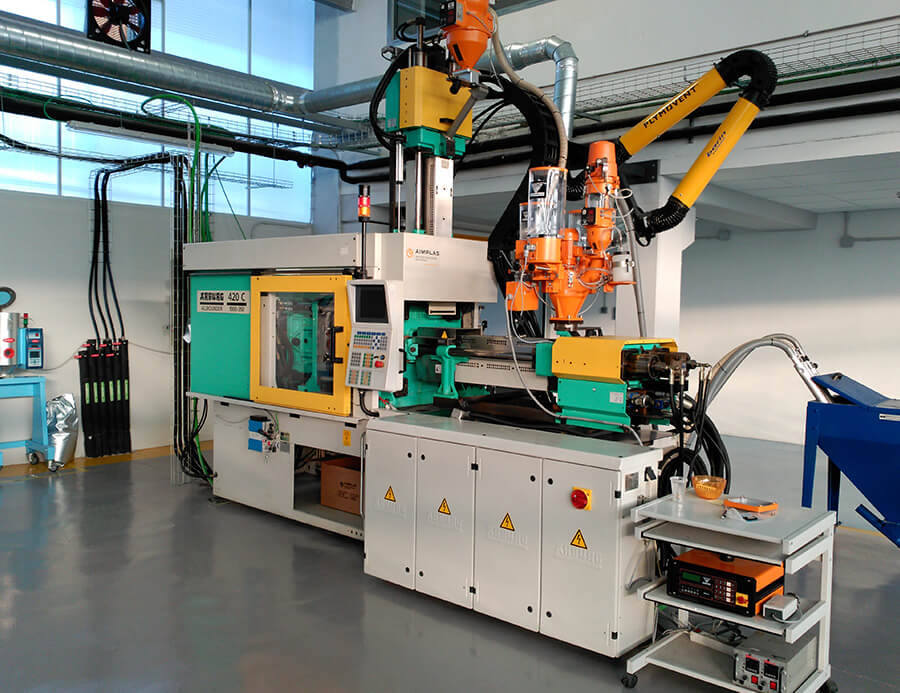
To meet growing demand in the plastics industry, AIMPLAS has blow moulding equipment for highly versatile analysis and validation of innovative developments in injection blow moulded containers. Our blow moulding units facilitate testing of a wide range of materials, including recyclable and recycled polymers and bioplastics, in line with the industry’s sustainability strategies.
Our blow moulding unit offers the ability to make rapid container design changes, thus enabling validation in a demonstrative format for any industry where the process can meet specific needs. Additionally, we can conduct training sessions at our facilities to provide more dynamic, hands-on educational sessions aimed at addressing potential challenges that may arise during the injection blow moulding process.

Materials Used in Injection Blow Moulding: PET and Sustainable Alternatives
PET is the primary material used in the production of injection blow moulded containers, especially bottles. However, AIMPLAS’ new technology makes it possible to test a wide range of polymer types, including recyclable and recycled options and bioplastics to align it with the environmental and sustainability strategies increasingly demanded by society and the plastics industry.
Main Applications of the Injection Blow Moulding Process
The main application area for the injection blow moulding process is the manufacture of containers for the food, cosmetics and pharmaceutical industries. However, it also has applications in the automotive and agriculture industries. The versatility of the process ensures production of containers in different shapes and sizes while optimizing their durability and properties to meet the specific needs of each industry.
Our equipment makes it possible to test an incredible variety of polymer types, including recyclable and recycled options and bioplastics
We adapt validation of demo parts for any industry where the process can meet specific needs
We conduct hands-on training sessions to address potential issues that may arise during the injection blow moulding process